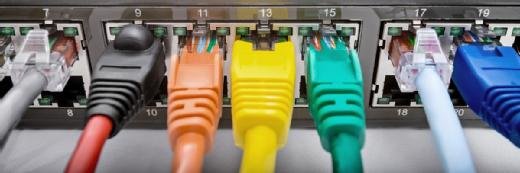
moisseyev - Fotolia
Wi-Fi vs. Ethernet: What's the difference and which is better?
When assessing Wi-Fi vs. Ethernet, each connection type has its benefits and drawbacks. Find out why one standard might be more reliable for your network.

Wi-Fi and Ethernet come from two different IEEE standards, but they're compatible enough to make them feel seamless when set up right.
Ethernet is spelled out in the 802.3 standards, while Wi-Fi is 802.11-based. Both are Layer 2 technologies when viewed against the OSI model and provide client access for the local network. But which one is better? And, in pitting Wi-Fi vs. Ethernet, which one is more reliable?
Let's start with the subjective notion of better. Here, there is no clear answer as situational specifics determine whether Ethernet or Wi-Fi is the more appropriate choice for connecting hosts to a network.
If I have racks of servers in a data center that never move and require the highest possible throughputs, Wi-Fi would be a silly access methodology. Likewise, the thought of hamstringing mobile access by requiring the use of a plugged-in patch cable everywhere a connection is needed also doesn't make a lot of sense. As a result, when comparing the two standards, better is determined by the cost of connectivity, required bandwidths, need for mobility or portability, and a host of other factors.
Reliability serves as key metric
When comparing Ethernet and Wi-Fi, reliability is easier to pinpoint. Assuming both the Wi-Fi and Ethernet networks have been designed properly, each can be reliable. But Ethernet has advantages Wi-Fi simply can't compete with.
For example, Ethernet uses a full-duplex and collision avoidance model, whereas Wi-Fi is half-duplex and employs a "collision detection and try again to transmit" methodology. Wireless is subject to radio interference at its physical layer. Ethernet has the benefit of being cloaked within carefully engineered structured cabling that provides a wide range of performance- and reliability-enhancing characteristics.
In addition, Ethernet network interfaces are fairly standard. Wi-Fi has to accommodate a wide variety of users and devices, making its connection scenarios more akin to the Wild West.
When assessing Wi-Fi vs. Ethernet, remember this: A wireless access point bridges 802.11 Wi-Fi to 802.3 Ethernet to get clients onto the LAN. These two technologies will continue to evolve in parallel.